
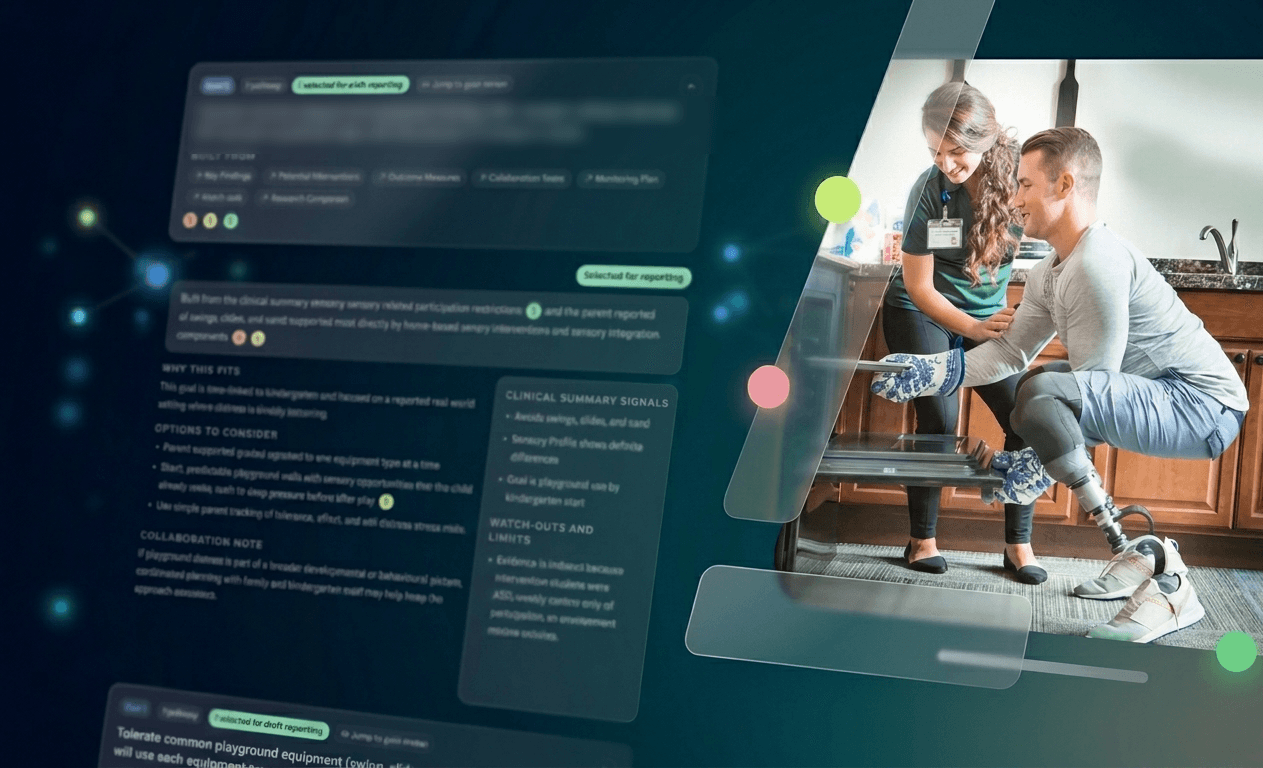
The evidence-basedAI workspacefor allied health.
Turn your case notes into a curated evidence base from the leading clinical journals and guidelines, which fuel SYMALA's agentic workflow.
SYMALA is not just another AI chatbot. It's an automated, structured and auditable workspace built for clinics who need evidence-based practice, without the hassle.
The Challenge
Answer-style AI still leaves allied health teams exposed.
The pain is not just research volume. It is the time it takes to translate evidence into usable care planning, the trust gap with generic AI output, and the documentation risk that shows up when funding or review pressure hits.
Manual evidence review is too slow
Reviewing, screening, and translating literature into care-plan-ready detail takes too much non-billable time in real allied health practice.
Generic AI is hard to trust
AI tools can sound fluent without genuinely using the latest clinical evidence available, and you get something different every time.
Weak documentation creates risk
When funding pressure, review, or supervision scrutiny lands, thin rationale and poor traceability become clinical and business liabilities.
So what's the solution?
SYMALA makes evidence-based practice actually possible.
Because it runs as a properly structured, yet fully automated clinical workspace, and brings the best allied health evidence into practice in a fraction of the time.
Some things that might surprise you
Evidence first, always
SYMALA simply cannot report on anything that's not surfaced during evidence discovery & ranking. Full stop.
Identifiers are removed before AI
Everything you input goes through a rigorous de-identification process. From initial input to follow-up notes, your patient identifiers are redacted before any AI gets involved.
You keep control of the work
Everything remains in your control. SYMALA has AI automation layers baked in to save you time and increase accuracy, but you get to steer the direction at each main step. Save your focus and decision-making energy for what really matters.
A consistent case structure
The workspace is structured so you get the same format for every case. Unlike ChatGPT etc., you know what you're going to get with SYMALA every time. Structure, reliability, and transparency.
Time saved per case
From half a day or more to under an hour.
Testing shows the same workflow typically takes 3-12 hours for a standard evidence search and appraisal. To compete with SYMALA's depth, a manual process can take days depending on the complexity.
Manual processing
Depending on complexity and depth
3-12+
SYMALA
Full depth evidence-based practice workflow
20-60m
SYMALA can synthesise large batches of dense information without losing focus, so speed does not come at the cost of depth.
Evidence Engine
A living corpus of the world's clinical evidence.
SYMALA reasons over tens of millions of peer-reviewed studies, spanning every allied health discipline and refreshed as new research is published — so each output reflects the current best evidence, never a frozen snapshot.
0M+
Peer-reviewed citations
0+
Journals indexed
Daily
New research added
0+ yrs
Of indexed evidence
Spanning the breadth of allied health
Our mission
The time saved only matters because of where it goes next: into better care, clearer decisions, and more sustainable work for the people providing support.
Better lives for the people who need support most.
We exist to make evidence-based practice genuinely providable for therapists, supervisors, and care teams, so more clinical skill reaches the people relying on them.
Join the CABWhat Clinics Get
Concrete gains in case work, supervision, and documentation.
This is the value shift: less time spent turning literature into something usable, and more time spent on billable care, team discussions, clearer plans, and documentation that stands up better when reviewed.
Evidence-backed case summaries
Start from a clearer clinical picture without rebuilding the evidence base from scratch every time.
Clearer goals with implementation detail
Turn evidence into next-step direction clinicians can actually use in planning and case discussions.
Pathway options linked to evidence
Keep relevant sources visible while shaping intervention, monitoring, and escalation decisions.
Faster draft reporting
Move toward report-ready documentation faster without losing the reasoning trail behind it.
Follow-up updates with carry-forward
Bring prior evidence and rationale forward so follow-up work does not start from zero.
Better defensibility under review
Make documentation easier to inspect when funding, audit, or external review pressure arrives.
Stronger supervision and collaboration
Bring structured summaries, precautions, and monitoring logic into team and supervision sessions.
More time back for billables and team care
Reduce research drag so clinicians can spend more time on delivery, professional development, and collaboration.
The Evidence-based Workspace
From de-identified notes to report-ready, traceable outputs.
SYMALA is not a typical question-answer chatbot with evidence. It is a structured and automated workspace that keeps evidence inspection, clinical reasoning, and documentation support connected across the workflow.
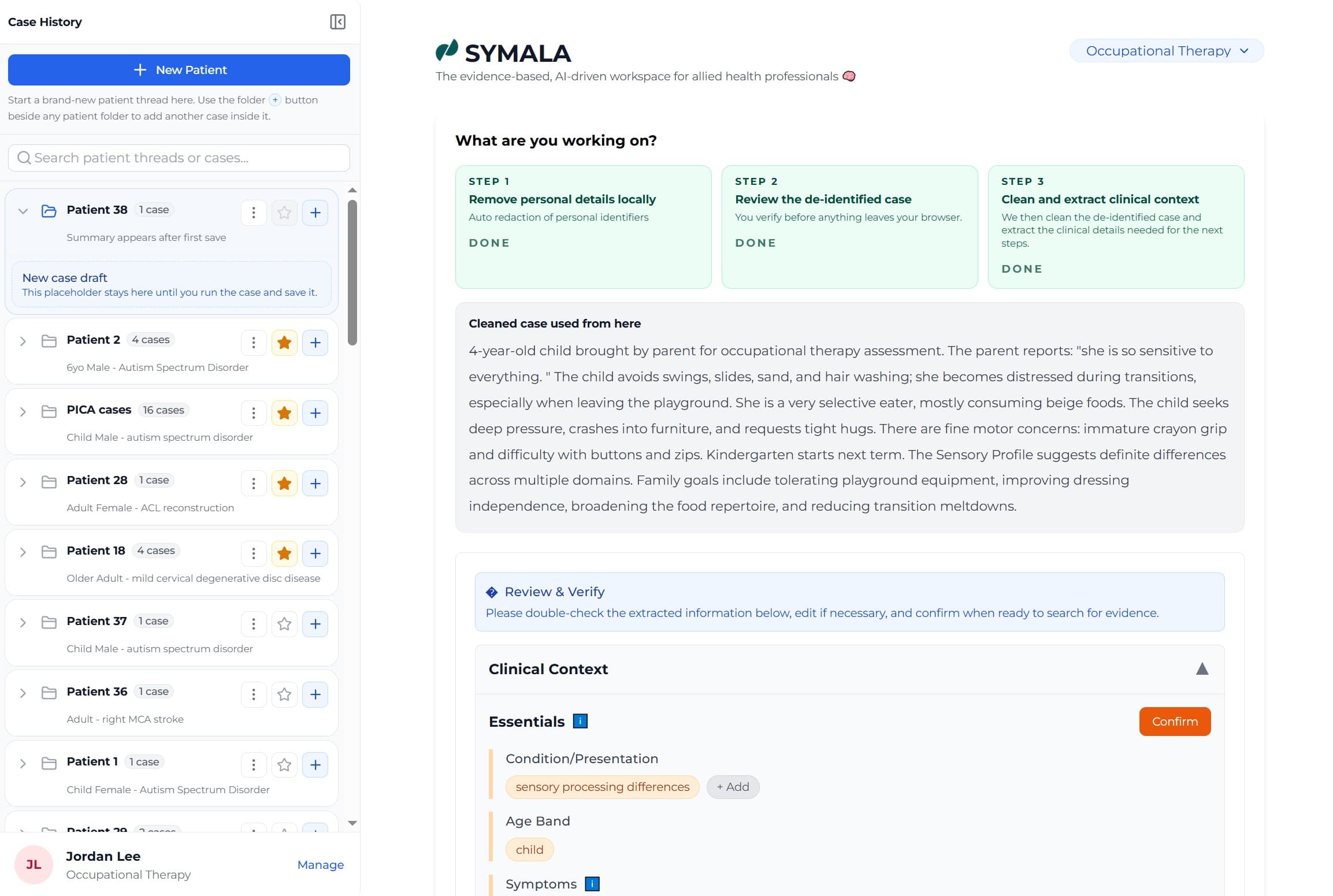
De-identify locally, review the case, and extract clean clinical context.
SYMALA helps the clinician remove identifying details, review the case safely, and extract the clinical context needed to power the rest of the workspace.
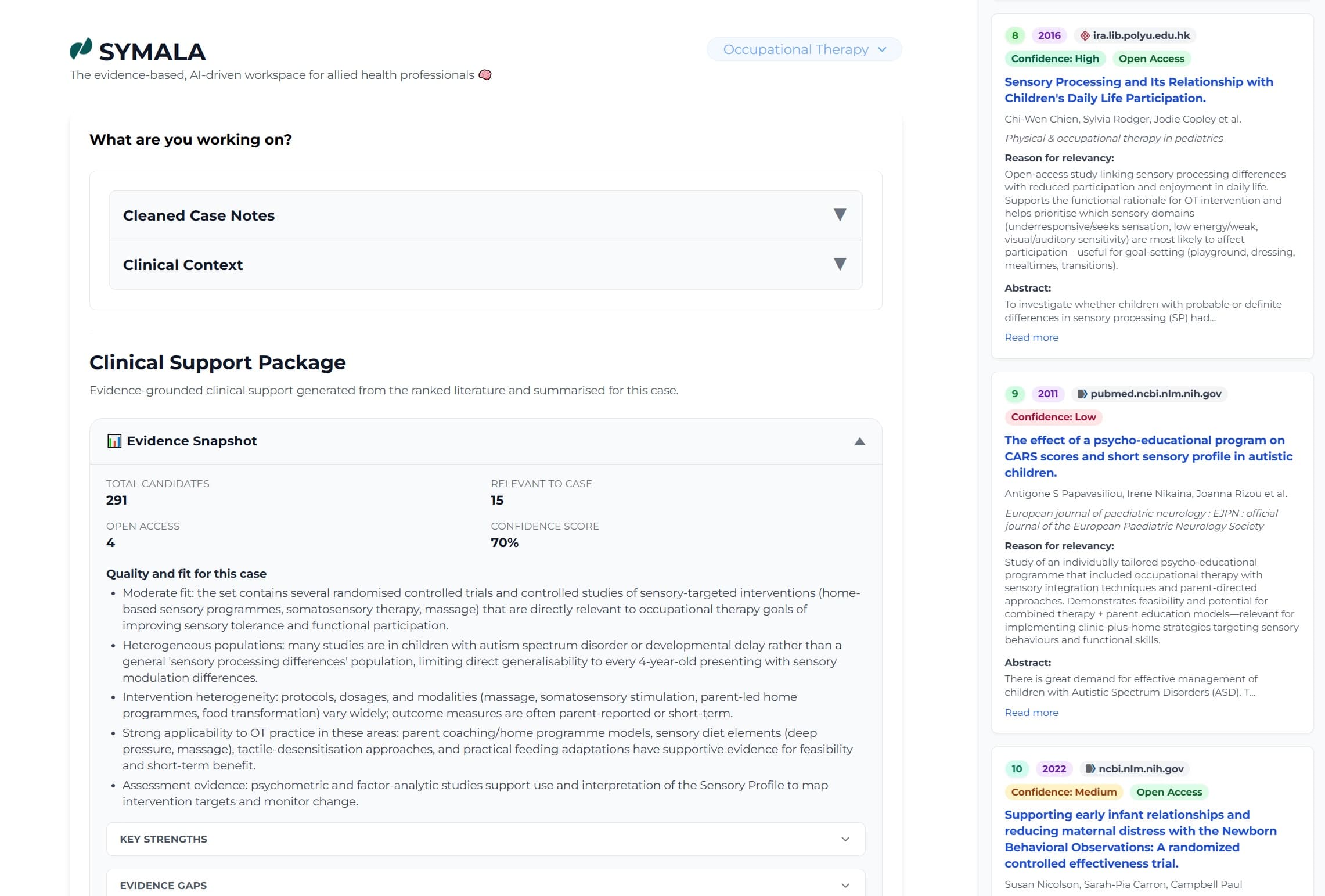
Discover, rank, and snapshot the evidence that fuels the workspace.
SYMALA searches a curated allied health evidence corpus, ranks what matters for the case, and creates an evidence snapshot that becomes the fuel for everything that follows.
See how evidence is discovered and ranked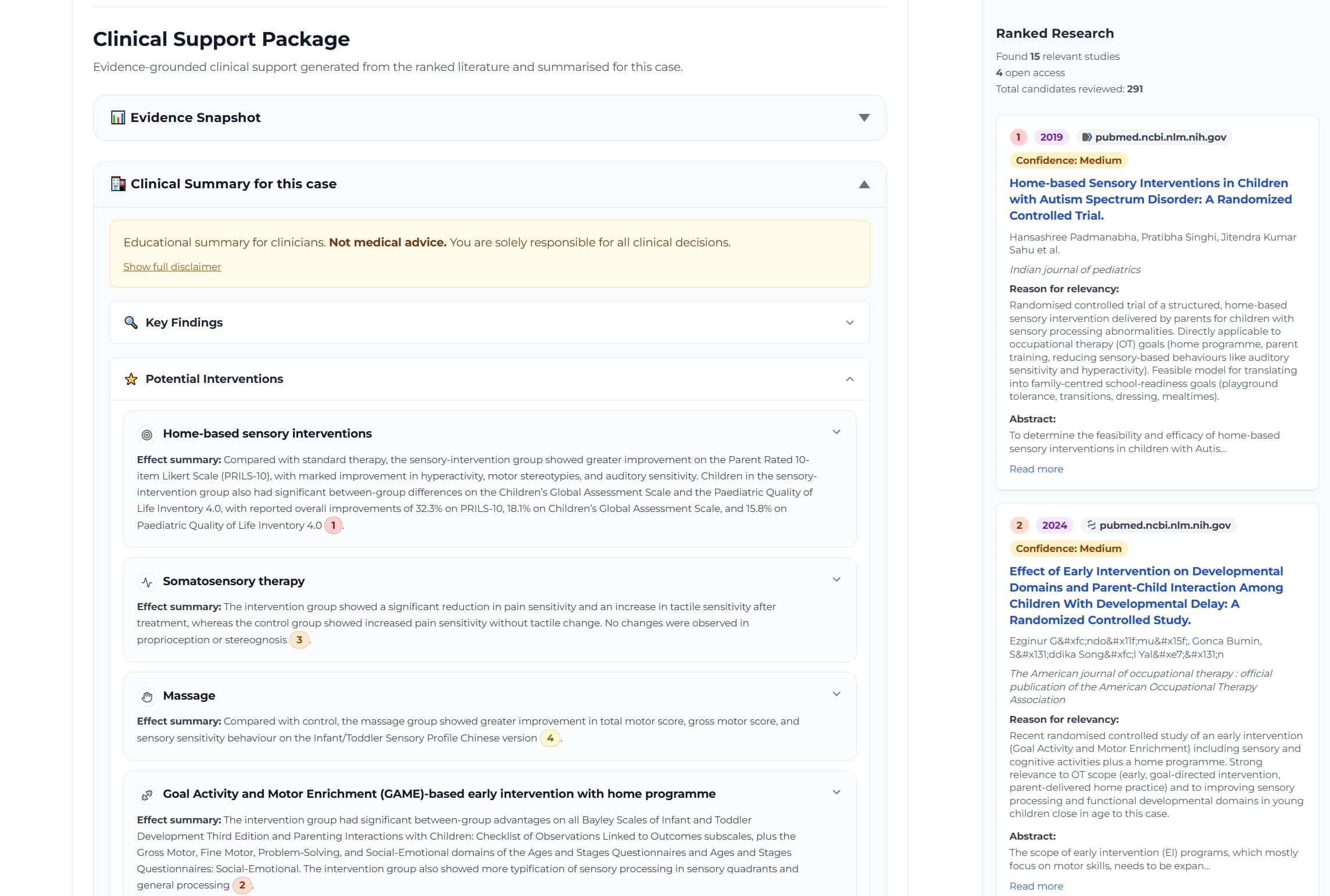
Turn the case context and evidence into a clinical summary with key findings.
SYMALA synthesises the evidence snapshot into a case-ready clinical summary, surfacing key findings and potential interventions without breaking the reasoning trail.
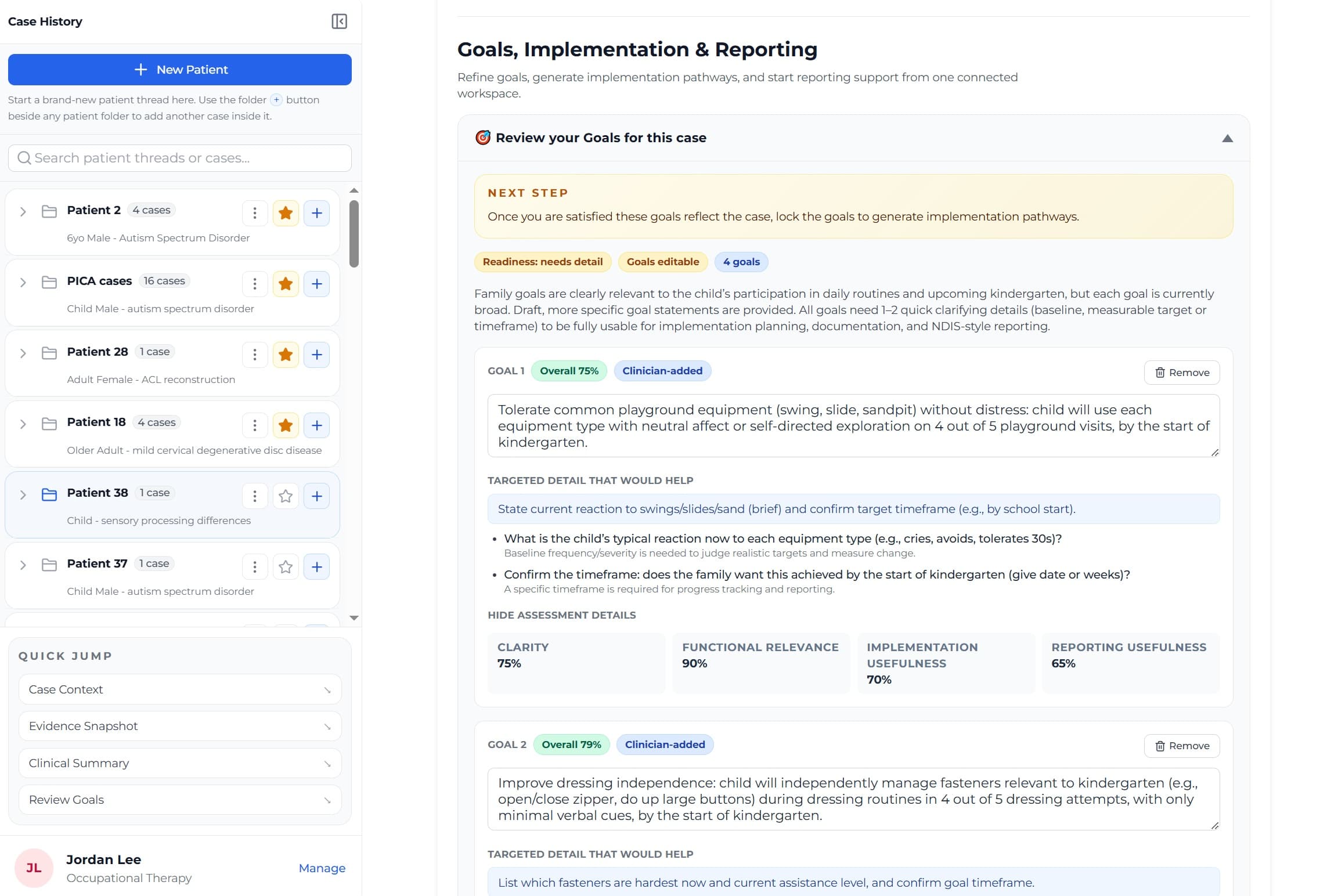
Help the clinician refine goals using the context, evidence, and summary.
Rather than starting goals from scratch, SYMALA helps the clinician shape clearer goals using the case context, ranked evidence, and synthesised summary already in the workspace.
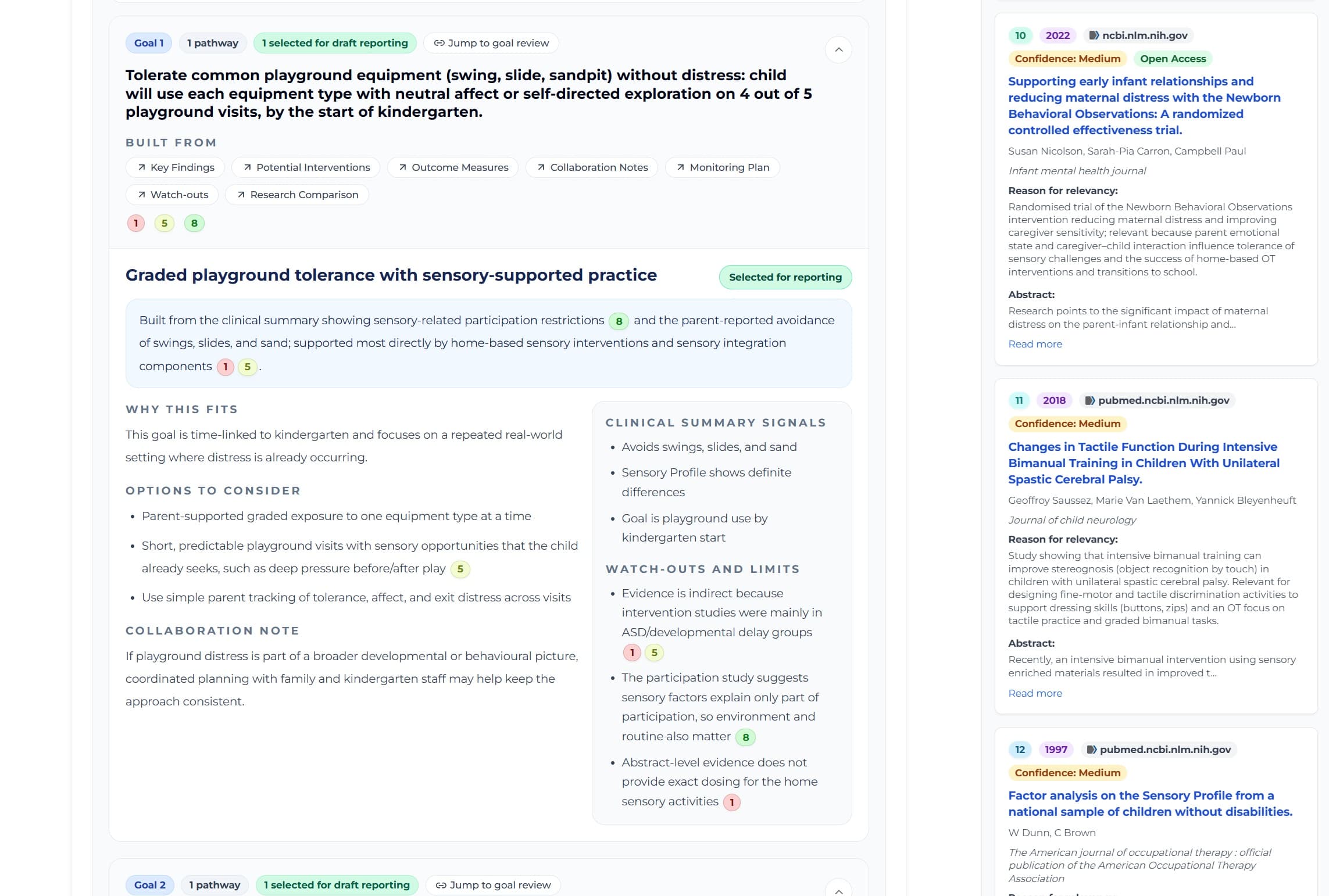
Generate evidence-based treatment pathways for planning.
Using the refined goals and synthesised information above, SYMALA proposes the most relevant evidence-based treatment pathways to help shape planning.
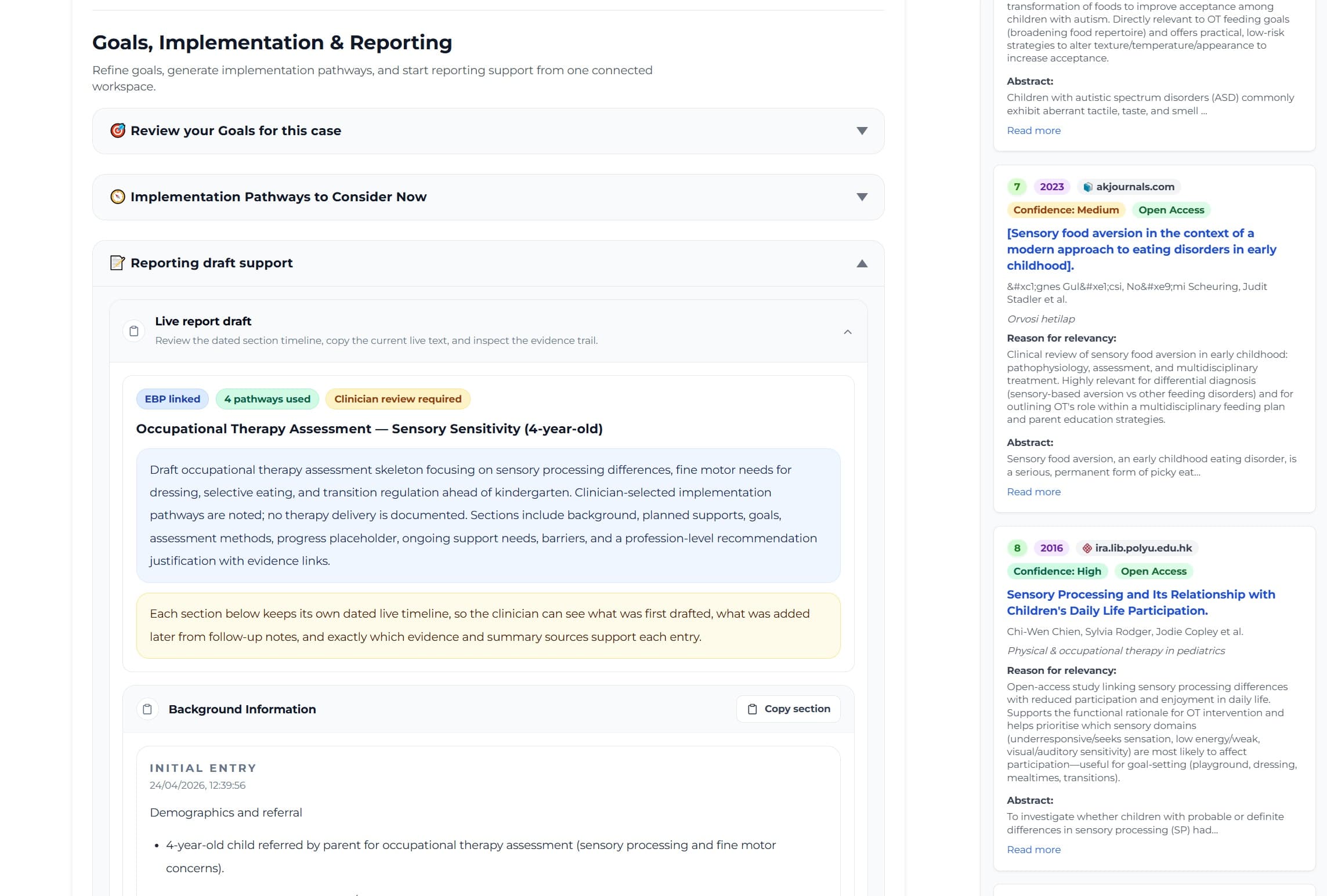
Create a structured report draft from selected goals and pathways.
Once the clinician selects the pathways they want to follow, SYMALA creates a structured report draft from the goals and pathways already held in the workspace, with an audit trail back through the evidence and reasoning.
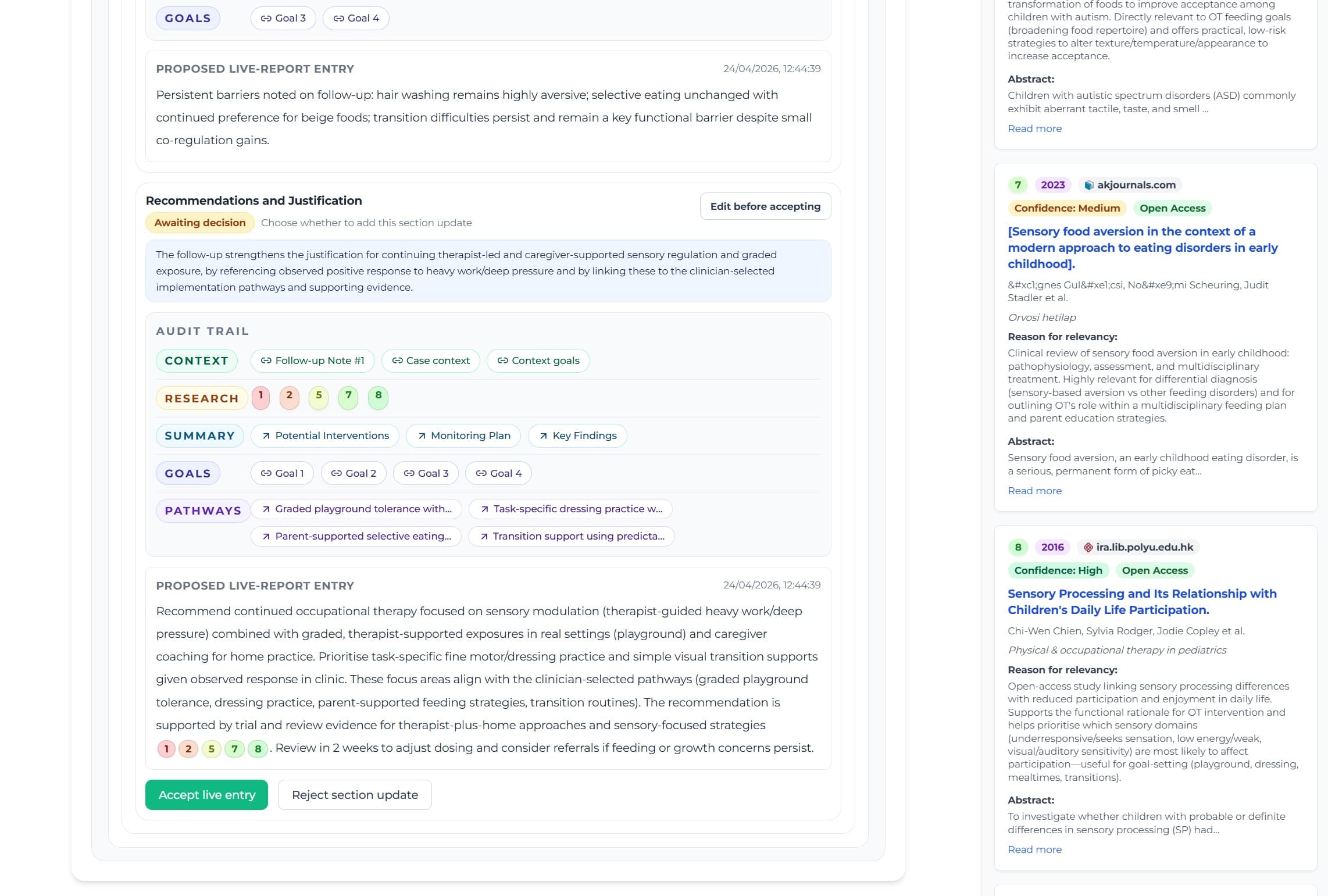
Carry follow-up case notes into the live report draft as care progresses.
The clinician can paste in follow-up notes over time, and SYMALA helps add to the live report draft where appropriate while keeping the audit trail tied back to the context, summary, goals, and pathways.
“
This clinical tool was extremely effective at gathering and summarising relevant evidence on complex, dual diagnosis cases, which helped set a clear path to further investigate relevant evidence-based approaches. This saved me a substantial amount of time and highlighted new research and alternative approaches to treatment.
How it's helping
Early clinician feedback is about time saved and clearer next steps.
The goal is not just to sound intelligent. It is to make complex evidence more usable in real cases while surfacing alternative approaches clinicians may want to inspect.
Clinic Advisory Board
Join the practices helping shape responsible AI for allied health.
We are inviting a small set of forward-thinking clinics into the advisory process. Members receive discounted grandfather pricing for life, VIP support, and a direct voice into our product roadmap.